AI Agents: The Next Shift in Business Operations and Growth
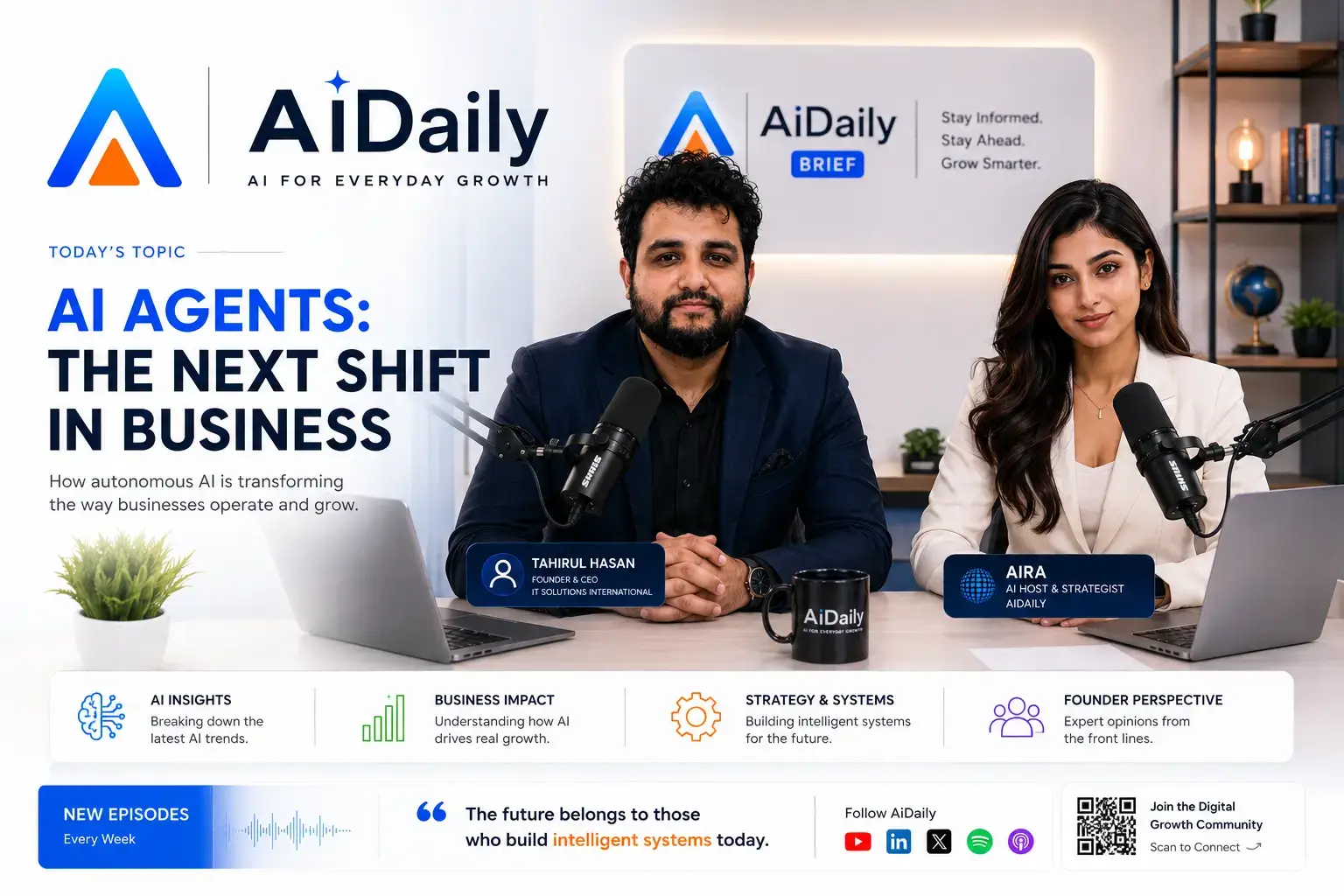
Why Intelligent Operational Systems May Redefine the Future of Enterprise Infrastructure
Artificial Intelligence is entering a new phase.
For the past several years, most public discussions around AI have focused on content generation, chatbots, and productivity assistants. Businesses experimented with AI-generated marketing copy, image generation systems, and conversational interfaces. Consumers interacted with large language models through search-like experiences. Startups raced to integrate generative AI features into software products.
But beneath the surface, a more significant transformation has quietly begun.
The next major evolution of AI is not simply about generating content.
It is about operational intelligence.
Across the global technology ecosystem, organizations are increasingly shifting from isolated AI tools toward interconnected AI systems capable of reasoning, coordinating workflows, interacting with software, executing tasks, analyzing business environments, and supporting decision-making processes.
These systems are increasingly referred to as AI agents.
From enterprise software companies and cloud infrastructure providers to AI research labs and SaaS platforms, the direction is becoming increasingly clear:
Businesses are moving toward intelligent operational ecosystems.
Organizations such as OpenAI, Microsoft, Google DeepMind, Anthropic, NVIDIA, Salesforce, and HubSpot are rapidly investing in AI-driven operational systems designed to augment enterprise workflows.
The implications extend far beyond automation.
AI agents may fundamentally reshape:
enterprise software architecture,
workforce operations,
organizational productivity,
customer management,
analytics infrastructure,
operational coordination,
and digital business strategy itself.
At IT SOLUTIONS INTERNATIONAL, we believe this shift represents one of the most important developments in business infrastructure since the rise of cloud computing.
Understanding AI agents is no longer optional for organizations seeking long-term operational relevance.
The Transition From Software Tools to Intelligent Systems
Traditional business software was designed around interfaces.
Employees manually interacted with dashboards, forms, reports, and operational systems to complete tasks.
Even automation platforms largely depended on predefined rule structures:
If X happens,
trigger Y.
These systems improved efficiency, but they remained fundamentally procedural.
AI agents introduce a different operational model.
Instead of merely executing static instructions, modern AI systems can increasingly:
interpret goals,
understand context,
retrieve information,
make probabilistic decisions,
coordinate across tools,
and dynamically adapt outputs.
This creates a new category of enterprise capability:
adaptive operational intelligence.
Unlike traditional software workflows, agentic systems are designed to operate across environments.
An AI agent may simultaneously:
access CRM systems,
analyze customer intent,
retrieve historical data,
draft communications,
trigger analytics workflows,
schedule operational actions,
and escalate critical issues.
The distinction is not merely technical.
It represents a broader shift in how businesses organize operational execution.
Why AI Agents Matter Now
The rapid rise of AI agents is not occurring in isolation.
Several structural trends are converging simultaneously.
1. Large Language Models Have Reached Operational Utility
Modern AI models are now capable of:
multi-step reasoning,
document interpretation,
code generation,
summarization,
contextual retrieval,
semantic analysis,
and structured task execution.
This significantly expands the range of business processes AI systems can support.
According to the Stanford Human-Centered AI Index Report, enterprise adoption of generative AI accelerated sharply across multiple sectors over the past two years.
Organizations are increasingly transitioning from experimentation toward operational deployment.
2. Enterprise Software Ecosystems Have Become Fragmented
Modern businesses often operate across dozens of disconnected tools.
A typical company may simultaneously use:
CRM platforms,
analytics systems,
communication tools,
ERP software,
marketing automation,
customer support platforms,
cloud infrastructure,
and internal documentation systems.
Operational fragmentation creates:
inefficiency,
duplicated workflows,
poor data visibility,
inconsistent decision-making,
and coordination overhead.
AI agents increasingly function as orchestration layers capable of connecting these fragmented environments.
3. Businesses Face Increasing Productivity Pressure
Organizations globally are under pressure to:
reduce operational costs,
improve productivity,
accelerate execution,
and maintain scalability with leaner teams.
According to McKinsey & Company, generative AI could contribute trillions of dollars in annual economic value globally.
However, the most significant value may not come from isolated productivity tools.
It may come from operational system redesign.
AI Agents Versus Traditional Automation
Many organizations incorrectly assume AI agents are simply advanced automation systems.
The distinction is important.
Traditional Automation
Traditional automation follows predefined logic.
Example:
When a customer submits a form,
send a confirmation email.
This model works well for predictable workflows.
However, it struggles in environments involving:
ambiguity,
contextual interpretation,
dynamic priorities,
and complex decision-making.
AI Agents
AI agents operate differently.
An AI-driven operational workflow may:
analyze customer sentiment,
prioritize urgency,
retrieve historical account data,
draft contextual responses,
update CRM records,
notify relevant teams,
and generate analytical summaries.
The operational difference is substantial.
AI agents increasingly function less like scripts and more like digital operational collaborators.
This is why many analysts believe the future of enterprise software may shift toward AI-native operational systems.
The Emergence of Operational Intelligence
One of the most important concepts businesses must understand is operational intelligence.
Historically, organizations optimized:
labor,
software,
infrastructure,
and communication systems.
AI agents introduce a new optimization layer:
intelligent coordination.
Operational intelligence refers to the ability of systems to:
interpret business conditions,
monitor workflows,
identify anomalies,
generate recommendations,
and support adaptive execution.
This has implications across virtually every business function.
Enterprise Use Cases for AI Agents
AI agents are already reshaping multiple operational categories.
Customer Support Systems
Modern AI support agents can:
classify tickets,
retrieve knowledge-base information,
summarize conversations,
route complex issues,
provide multilingual assistance,
and reduce support response times.
According to Microsoft Work Trend Index, organizations increasingly expect AI copilots and workflow systems to augment operational productivity.
Sales and CRM Operations
AI agents can:
qualify leads,
analyze buyer intent,
generate follow-ups,
forecast opportunities,
and coordinate sales workflows.
Rather than replacing sales teams, AI systems increasingly augment decision-making and reduce administrative overhead.
Analytics and Business Intelligence
One of the strongest near-term applications for AI agents is operational analytics.
AI systems can:
monitor KPIs,
identify anomalies,
summarize business performance,
generate dashboards,
and surface operational insights.
This allows businesses to move from reactive reporting toward proactive operational visibility.
Marketing Infrastructure
AI agents increasingly support:
campaign optimization,
audience segmentation,
content coordination,
SEO workflows,
reporting automation,
and customer journey analysis.
The future of marketing may increasingly depend on intelligent orchestration systems rather than isolated campaign execution.
Internal Operations and Knowledge Management
Organizations often struggle with fragmented internal knowledge.
AI agents can support:
document retrieval,
onboarding workflows,
policy assistance,
operational coordination,
and internal support systems.
This becomes increasingly important as businesses scale.
The Future of SaaS May Be AI-Native
One of the most under-discussed implications of AI agents is their impact on software architecture itself.
Traditional SaaS platforms were built around user interfaces.
Users manually navigated software environments to:
update records,
retrieve information,
coordinate workflows,
and execute tasks.
AI agents increasingly reduce dependency on manual interface navigation.
Instead of navigating software directly, users may increasingly interact through:
conversational systems,
intelligent copilots,
autonomous operational agents,
and orchestration layers.
This may fundamentally reshape how enterprise software is designed.
NVIDIA CEO Jensen Huang has repeatedly emphasized that AI infrastructure and accelerated computing are becoming foundational layers of modern enterprise systems.
Similarly, Satya Nadella has described AI as a major platform shift capable of transforming productivity and enterprise operations.
These signals matter.
Historically, major platform transitions have redefined entire industries.
Why Governance and Compliance Matter
As AI systems gain operational autonomy, governance becomes increasingly important.
AI agents often interact with:
customer information,
internal systems,
financial workflows,
operational data,
and enterprise infrastructure.
Without governance frameworks, organizations risk:
inaccurate outputs,
compliance violations,
security vulnerabilities,
operational instability,
and reputational damage.
Businesses deploying AI systems increasingly require:
access control,
audit ability,
monitoring,
consent management,
compliance infrastructure,
and human oversight.
This is one reason enterprise-grade AI adoption increasingly intersects with:
cyber security,
analytics,
operational governance,
and digital infrastructure strategy.
Why Smaller Businesses Should Pay Attention
A common misconception is that AI infrastructure is relevant only for large enterprises.
That assumption is rapidly becoming outdated.
Cloud infrastructure, APIs, automation platforms, and AI ecosystems have dramatically lowered implementation barriers.
Even smaller organizations can increasingly deploy:
AI-driven support systems,
operational workflows,
analytics automation,
customer management systems,
and intelligent reporting environments.
The businesses learning to integrate operational intelligence early may gain substantial competitive advantages.
Historically, early adopters of:
websites,
cloud computing,
analytics,
and digital marketing
often gained long-term strategic leverage.
AI operational systems may represent a similar transition.
The Shift From Digital Presence to Digital Infrastructure
For years, many organizations viewed digital transformation primarily through the lens of:
websites,
social media,
advertising,
and online branding.
That perspective is no longer sufficient.
The future increasingly depends on infrastructure.
Modern organizations require:
analytics visibility,
workflow automation,
operational coordination,
compliance systems,
centralized data,
intelligent reporting,
and scalable operational architecture.
This is why AI agents are becoming strategically important.
They increasingly function as connective operational layers.
Rather than simply improving isolated tasks, AI systems may help organizations redesign how operations themselves function.
Human + AI Collaboration Will Define the Next Era
Much public discourse around AI focuses on replacement.
The more realistic near-term outcome is augmentation.
The strongest organizations will likely combine:
human strategy,
organizational judgment,
operational systems,
and AI-driven execution.
This collaborative model is already emerging across:
customer operations,
enterprise analytics,
software development,
marketing systems,
and business intelligence environments.
The future may not belong to businesses with the largest teams.
It may belong to businesses with the most intelligent operational systems.
The Strategic Importance of Authority in the AI Era
As AI-generated content becomes increasingly commoditized, trust and operational credibility become more valuable.
Businesses that demonstrate:
systems understanding,
implementation capability,
operational depth,
and infrastructure thinking
will likely hold stronger long-term authority.
This is one reason many organizations are investing in:
educational ecosystems,
long-form strategic content,
podcasts,
operational insights,
and thought leadership.
Authority itself is becoming a form of infrastructure.
Organizations that educate markets often shape markets.
The ITSI Perspective on AI Infrastructure
At IT SOLUTIONS INTERNATIONAL, our long-term perspective is that AI should not be treated merely as a marketing feature.
AI increasingly intersects with:
analytics,
automation,
operational workflows,
compliance,
business intelligence,
and scalable infrastructure systems.
From an operational perspective, businesses increasingly require:
visibility,
connected systems,
intelligent workflows,
and adaptive digital operations.
The future is likely to favor organizations capable of integrating:
strategy,
infrastructure,
operational intelligence,
and AI systems cohesively.
This is not simply a software shift.
It is an organizational transformation.
Join the Digital Growth Community
As AI systems continue reshaping business operations globally, the need for practical operational understanding continues to grow.
The Digital Growth Community is being developed for:
founders,
operators,
marketers,
developers,
startups,
and businesses exploring AI-driven growth systems.
Core areas include:
AI agents,
operational automation,
analytics,
infrastructure systems,
SEO,
growth intelligence,
and digital transformation.
Explore More
Connect Author in LinkedIn – Tahirul Hasan
Final Thoughts
AI agents represent far more than another software trend.
They may become foundational components of modern operational infrastructure.
The transition from:
fragmented tools,
manual coordination,
and static workflows
toward:
intelligent systems,
operational orchestration,
and AI-native infrastructure
is accelerating rapidly.
The organizations preparing early may gain advantages through:
operational efficiency,
scalability,
adaptability,
faster execution,
and stronger strategic intelligence.
The future of business growth may not depend solely on larger organizations.
It may increasingly depend on organizations capable of building:
smarter operational systems.
And the rise of AI agents may represent the beginning of that transformation.